Powering a golf cart reliably starts with choosing the right 12-volt battery setup. This guide highlights high-capacity 12V options, including LiFePO4 and lead-acid choices, that are commonly used in golf carts, trolling motors, and off-grid systems. Each product below is evaluated for compatibility, lifespan, and safety features to help you compare performance and value across brands.
| Product | Brand | Type | Capacity | Approx. Depth Of Discharge |
|---|---|---|---|---|
| DJLBERMPW 4-Pack 12V 100Ah LiFePO4 | DJLBERMPW | LiFePO4 (Series for 48V) | 100Ah per module | Up to 60–100% DOD depending on configuration |
| Trojan T-1275 12V 150Ah | Trojan Battery Company | Flooded Lead Acid | 150Ah | Typically ~50% for cycle life optimization |
| US Battery US12VXC2 12V 155Ah | U.S. Battery | Flooded Lead Acid | 155Ah | GC2/GC12 sizing, deep-cycle oriented |
| Dyness 12V 100Ah LiFePO4 | Dyness | LiFePO4 | 100Ah | Up to 10-year life, 15000+ cycles at lower DoD |
| GRNOE 12V 100Ah Lithium (4-Pack Available) | GRNOE | LiFePO4 | 100Ah per battery | Low-temp protection with BMS |
DJLBERMPW 4P 12V 100Ah LiFePO4 (4 Pack In Series To 48V)

DJLBERMPW’s 4-pack of 12V, 100Ah LiFePO4 modules is designed for scalable 48V systems. Each battery features a built-in 100A BMS with overcharge, over-discharge, over-current, and short-circuit protection, plus low-temp cut-off for safer operation in cold climates. Weight is lighter than comparable lead-acid packs, aiding installation in compact golf cart compartments. The system supports up to four in series, delivering up to 48V with improved cycle life and environmental resilience. Applications include golf carts, RVs, and off-grid setups.
Key specs include UL1973-tested cells, a 0°C to 45°C charging range, and a discharge range down to -20°C. Expect longer cycle life (up to 15000 cycles at partial DoD) with proper care, and a recommended 20A charger for best results. If unused for extended periods, recharge every 3–5 months to maintain readiness.
This configuration suits users upgrading from lead-acid or building a high-efficiency 48V golf cart power system. Parallel or serial connections provide flexibility for larger installations or fleet deployments.
Trojan T-1275 12V 150Ah Flooded Lead Acid

The Trojan T-1275 is a long-standing flooded lead-acid option with a GC12 designation, offering robust cycle life when properly managed. At 12V and 150Ah, it provides substantial capacity suitable for classic golf carts and heavy-use trolling setups. Maintenance includes water top-offs and a leak-proof enclosure, with proper venting and charging practices to maintain longevity. This option is favored for those who need reliability with accessible replacements and established service networks.
Considerations include weight, venting, electrolyte management, and temperature sensitivity. Lead-acid chemistry can perform well with regular, smart charging and periodic equalization. It remains a cost-effective choice for many golf carts, particularly where charging infrastructure favors traditional charging cycles.
US Battery US12VXC2 12V 155Ah Deep Cycle
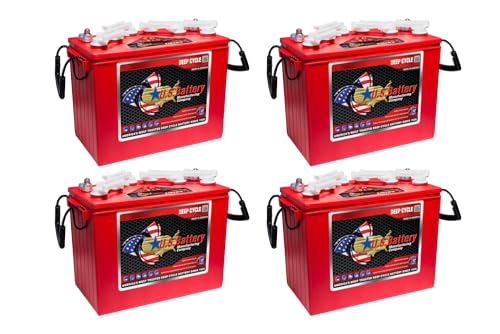
The US12VXC2 offers a high-capacity 12V deep-cycle option, designed for long runtimes and steady power delivery in golf carts. This flooded lead-acid battery aligns with traditional charging routines and provides a familiar maintenance profile for owners upgrading from smaller 12V packs. Capacity in the 150–155Ah range supports extended operation between charges, making it a practical choice for older carts or setups prioritizing reliable availability of voltage under load.
Key factors include thermal sensitivity, water maintenance, and charging compatibility with standard golf cart chargers. For best results, use a charger suitable for GC12-sized batteries and monitor electrolyte levels as part of regular maintenance.
Dyness 12V 100Ah LiFePO4
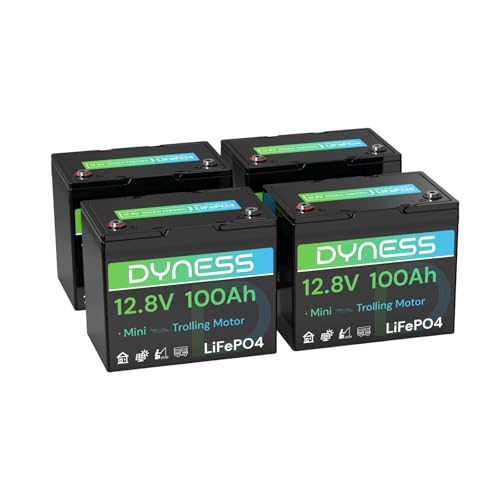
Dyness delivers a compact 12V, 100Ah LiFePO4 option with a strong emphasis on space efficiency and weight reduction. The battery compactly fits smaller installations (Group 24 form factor) while delivering up to a 10-year lifespan and 15000+ cycles at favorable DoD. A built-in BMS protects against common faults, and a low-temperature protection feature helps maintain performance in cold climates. This makes it a solid choice for golf carts needing a lighter, longer-lasting module with flexible installation options.
Dyness emphasizes energy density and durability, though users should assess charging requirements and ensure compatible 14.6V charging profiles for LiFePO4 cells to optimize longevity and performance.
GRNOE 12V 100Ah LiFePO4 (4-Pack Available)

GRNOE’s 12V, 100Ah LiFePO4 battery focuses on smart low-temperature cut-off and robust BMS protection. Its cold-weather performance supports RVs, cabins, and off-grid golf cart use where temperatures can drop. The unit is compact for a 12V LiFePO4 module and is designed to work in both standalone and modular configurations. The BMS safeguards against overheating, overcurrent, and short circuits, contributing to a longer effective lifespan when paired with appropriate charging equipment.
When considering GRNOE, ensure a charger compatible with 14.6V±0.2V for LiFePO4 cells. The product is positioned as a durable, space-conscious choice for modern golf carts seeking lightweight, high-cycle-life power.
Buying Guide: Key Purchase Considerations
Battery chemistry: LiFePO4 variants offer longer cycle life, lighter weight, and higher tolerance to deep cycling, but initial costs are higher. Flooded lead-acid batteries are cheaper upfront but require regular maintenance and venting. Choose based on maintenance willingness and lifetime cost.
Capacity and DoD: Larger Ah ratings deliver longer runtimes, but the usable DoD affects real-world performance. LiFePO4 often enables higher usable DoD with longer lifespan than lead-acid, translating to extended service between charges.
Charger compatibility: Match the charger’s voltage and current to the battery chemistry. LiFePO4 typically uses about 14.6V charging profiles, while lead-acid systems may tolerate different charging voltages. A mismatched charger can reduce life and performance.
Temperature considerations: Many LiFePO4 batteries have safe operating and charging ranges outside extreme temperatures, with low-temperature cut-offs to protect cells. In cold climates, ensure the chosen pack and charger support winter operation.
Physical fit and configuration: If upgrading a golf cart, confirm battery dimensions, weight, and container fit. Some systems allow series connections up to 48V for golf carts, while others enable parallel expansion for higher capacity.
Warranty and service: Review manufacturer warranties, known service networks, and replacement policies. Longer warranties and readily available support can reduce total ownership risk.