Choosing the right 8V golf cart battery is essential for reliable performance and long run times on the course or at the storage yard. This guide highlights five top 8-volt deep cycle options, focusing on 170Ah or near-capacity batteries that fit popular GC8 (T-875) configurations. Each listing includes key specs, durability notes, and what to consider when selecting a replacement or upgrade. Use the quick reference table below to compare the featured models at a glance.
| Brand | Model | Voltage | Capacity (Ah) | Notes |
|---|---|---|---|---|
| Rocket | Rocket L-875 170Ah | 8V | 170 | replaces Trojan T-875; 6-pack option |
| Trojan Battery Company | T-875 8V Deep Cycle | 8V | 170 | GC8 size; reliable deep cycle |
| Trojan Battery Company | Trojan T-875 8V (6 Pack) | 8V | 170 | Popular golf cart pack |
| U.S. Battery | US8VGC 170Ah | 8V | 170 | Versatile for solar, marine, RV |
| Pacer Battery Company | Pacer P-875 165Ah | 8V | 165 | GC8 compatible; near 170Ah |
Note: All products listed are compatible with common GC8 (T-875) golf cart configurations and are widely used for high-drain applications. When selecting a replacement, consider capacity, cycle life, lead-acid type (flooded vs. AGM), installation space, and the availability of compatible chargers and reconditioning options.
Rocket L-875 170Ah 8V Golf Cart Battery — Replaces Trojan T-875
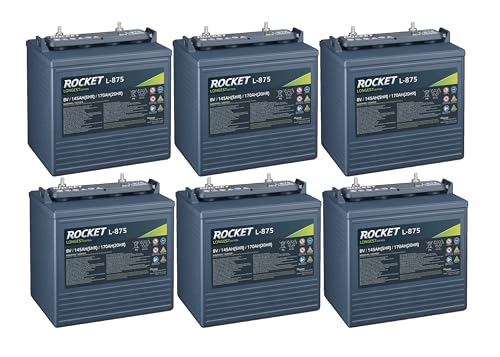
The Rocket L-875 is designed to deliver 8-volt deep cycle performance with a 170Ah capacity, aligning with typical T-875 specifications. This battery is marketed as a direct replacement for Trojan T-875 packs, which makes it a straightforward option for golfers seeking established compatibility in 6-pack configurations. The 8V deep cycle design supports extended run times between charges, making it suitable for long courses or busy carts. Durability and reliable discharge are key traits emphasized by the brand, which positions this model as a practical alternative for standard golf cart use.
Key features include:
- Voltage: 8V
- Capacity: 170Ah (20-hour rate)
Considerations for this option include ensuring your charger and connectors are compatible with non-OEM replacements and confirming any warranty terms when used as a Trojan T-875 substitute. The compact 6-pack compatibility makes it suitable for fleets or households that already run multiple carts.
Trojan T-875 8V Deep Cycle Lead Acid Battery, 170Ah

Trojan is a long-standing name in golf cart batteries, and the T-875 8V Deep Cycle 170Ah model is a staple in many carts. Built for deep discharge and long life, this battery is part of Trojan’s GC8 group size lineup and is suitable for frequent cycling in golf cart applications. The design emphasizes reliable performance in both residential and commercial settings, making it a common choice for upgrades and replacements in existing 8V configurations. This pack setup typically ships as a 6-battery set for full cart replacement.
Key features include:
- BCI: GC8
- Voltage: 8
- Cells: 4
When selecting Trojan, customers often consider the availability of replacement parts, compatibility with a given charger, and the weight of the pack, which can influence installation in carts with space or mounting constraints. Trojan’s reputation for durability and steady discharge makes it a go-to option for many operators seeking proven performance.
Trojan T-875 8V Deep-Cycle Flooded Battery (6 Pack)

This Trojan T-875 pack is a deep-cycle flooded battery arrangement designed for extended run times in golf carts and other heavy-use applications. The 8V design with a 170Ah capacity is well-suited for demanding cycles and provides robust discharge performance. The flooded design uses liquid electrolyte and requires standard maintenance, including periodic water top-ups and terminal cleaning. The pack is described as durable and capable of withstanding vibration and continuous use, which is beneficial for carts operating on rough surfaces or with frequent travel between holes or sites.
Highlights include:
- 8V Deep-Cycle Flooded Lead-Acid
- 170Ah capacity
- Durable poly/ polypropylene casing with vibration tolerance
Potential considerations involve maintenance needs, venting requirements, and ensuring proper ventilation in enclosed storage areas. This option is popular for golfers seeking a robust, field-proven battery with a long track record in golf cart ecosystems.
U.S. Battery US8VGC 170Ah Deep Cycle Golf Cart Battery

The U.S. Battery US8VGC is a versatile 8V deep cycle battery designed for golf carts and other heavy-use systems. With a 170Ah 20-hour rating, it is positioned as a direct 8V replacement that aligns with GC8 sizing. The product line emphasizes reliability across multiple platforms, such as solar installations, marine applications, and RVs, which can be attractive for households or fleets that want a single battery type across different uses. The construction focuses on durability and consistent discharge to support steady cart performance over longer trips or more aggressive driving patterns.
Notable aspects include:
- Voltage: 8
- BCI: GC8
- 20 Hour Rate: 170
For buyers, considerations include availability of replacement cells, charger compatibility, and whether expansion to larger capacities is anticipated in the future. U.S. Battery’s design supports long-term maintenance cycles and easier serviceability in many fleet environments.
Pacer P-875 8 Volt 165Ah Deep Cycle Battery

The Pacer P-875 is a solid 8V deep cycle option that sits close to the 170Ah mark with 165Ah capacity. As a GC8-compatible model, it is well-suited for golf carts requiring reliable power with a slightly lower Ah rating, which can still deliver robust performance for typical course usage and weekend play. Pacer batteries are often chosen for affordability and compatibility with existing 8V setups, making replacement straightforward for many cart owners who already standardize on T-875 family packs.
Key details include:
- Voltage: 8
- BCI: GC8
- Capacity: 165Ah (20-hour rate)
When evaluating this option, buyers may consider marginal differences in cycle life and the potential impact on range per charge. The 165Ah rating is close enough for most golfers who don’t require the full 170Ah, and the Pacer brand provides a practical balance of price, performance, and compatibility in many carts.
Buying Guide: Key Purchase Considerations And Comparisons
- Compatibility: Ensure the battery size matches your cart’s GC8/T-875 configuration. Check BCI group size, dimensions, and typical mounting provisions. Some carts accept newer or older battery brands with adapters or specific tray configurations.
- Capacity and cycle life: A higher Ah rating generally means longer run times between charges. Consider your driving style, course length, and how often you recharge to decide between 165Ah, 170Ah, or higher options. Flooded designs tend to require more maintenance, while sealed options reduce maintenance tasks.
- Maintenance needs: Flooded lead-acid batteries require water top-offs and venting considerations. AGM or sealed options offer easier maintenance but may come with different charging requirements. Verify your charger’s compatibility with the chosen chemistry.
- Weight and space: Larger capacity packs can be heavier and may affect cart handling and mounting. Measure space in the battery compartment and ensure the new pack weight is within tolerances to avoid performance issues.
- Warranty and support: Look for manufacturer warranties, replacement policies, and availability of service support. Reputable brands (such as Trojan, U.S. Battery, and Trojan’s GC8 lineup) often provide longer-term peace of mind for fleet use.
- Price and value: Compare total cost of ownership, including installation and potential maintenance. A slightly higher upfront cost may be offset by better cycle life and lower maintenance over time.
- Environmental and safety concerns: Proper handling precautions, venting requirements, and safe disposal are important for lead-acid batteries. Follow local regulations and recycling programs.
- Future-proofing: If you anticipate upgrades to charging systems or fleet expansion, consider modules that offer compatibility with future chargers and replacement parts to minimize intermixing.