If you want precise shot data from home, an at-home launch monitor offers reliable analytics and interactive practice. This guide highlights five top options suited for different types of players—from casual weekend golfers to serious enthusiasts—so you can pick the right fit for indoor or outdoor setups. Each pick includes who it’s best for, key strengths, and a practical caveat to consider before buying.
| Product | Best For | Key Strength | Consideration |
|---|---|---|---|
| Rapsodo MLM2PRO Launch Monitor (3 ProV1 Balls) | Home practice with realistic data and simulated courses | Doppler radar and dual cameras for accuracy; 13+ core metrics | Premium features require subscription after trial |
| TAGCMC Portable Golf Launch Monitor | Compact setup for small spaces and mobile training | Environmental sensors adjust data to real conditions; 3D visuals | Data depth depends on smartphone integration |
| Rapsodo MLM2PRO (Chrome Tour Balls) | Same trusted platform with different ball option for variety | Measures spin, spin axis, swing speed; home and practice use | Data relies on device pairing; ensure compatibility |
| Garmin Approach R10 Portable Launch Monitor | Indoor practice and driving-range sessions with long battery life | Tracks club head speed, ball speed, spin, launch angle | Renewed option may vary in availability and condition |
| Skymons Portable Golf Launch Monitor | Budget-friendly entry with mobile tracking and testing modes | Doppler radar for real-time data; home or outdoor use | Limited functionality on entry model; consider upgrade path |
Rapsodo MLM2PRO Launch Monitor Golf Simulator

Best for: Players seeking pro-level data in a familiar platform. This model captures 15+ metrics including spin rate, spin axis, carry distance, club speed, and launch angle. It uses a Doppler radar plus dual cameras for reliable measurements, and includes a 45-day premium trial for simulated courses and app integrations. Choose this if you want strong data depth and a robust training ecosystem at home.
Limitation: The premium features require ongoing membership after the trial period.
Portable Golf Launch Monitor & Simulator (TAGCMC)

Best for: Practitioners with limited space who want a flexible, smartphone-driven setup. It adds built-in environmental sensors that adjust data to current conditions and provides expanded metrics such as attack angle, launch angle, and swing-only mode. The immersive 3D range visuals assist in analyzing swing paths, making it ideal for home or outdoor use.
Limitation: Deeper analysis and precision depend on smartphone compatibility and software support, so verify your device before purchase.
Rapsodo MLM2PRO Chrome Tour Balls Edition

Best for: Players who want the same trusted MLM2PRO experience with a different ball option for varied feedback. It measures 13 core metrics including spin rate and swing speed, and can pair with smartphones to create a home simulator environment. Useful for consistent practice and swing analysis when space is limited.
Limitation: Ensure the ball type compatibility with your current setup and app features to avoid data mismatches.
Garmin Approach R10 Portable Golf Launch Monitor
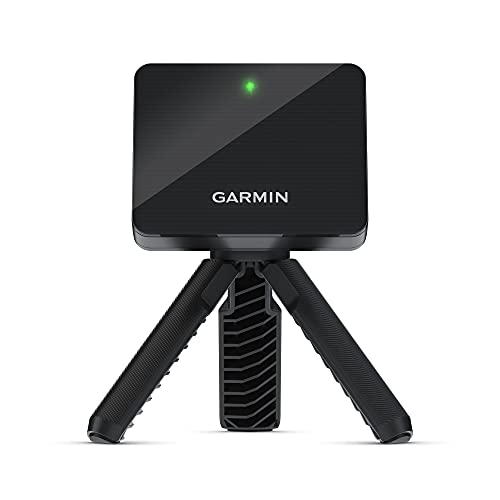
Best for: Players seeking a reliable, all-around monitor with longer battery life and extensive training modes. The Garmin Golf app tracks metrics like club head speed, ball speed, spin, and launch angle, plus it supports training modes and dispenses shot dispersion charts by club. Great for routine home practice and driving-range sessions.
Limitation: This unit may feel redundant if you already own Garmin devices; check app compatibility and course data availability for your region.
Skymons Portable Golf Launch Monitor

Best for: Beginners and budget-conscious players who want a compact monitoring solution. The PRO X1 Lite provides essential data, with options to upgrade to more advanced modes later. Suitable for home or outdoor use and easy to set up.
Limitation: Entry-level data may lack the depth found in higher-tier models; consider potential upgrade paths if you need richer analytics.
Buying Guide: Key Considerations For Choosing An At-Home Launch Monitor
- Data depth versus simplicity: Do you want 10+ metrics (spin, axis, launch, etc.) or a core set focused on swing speed and ball speed?
- Space and mounting needs: Will you practice indoors with a projector screen or outdoors on a turf mat? Ensure your monitor’s sensor placement suits your space.
- Data integration: Do you prefer a smartphone app, a dedicated software suite, or integration with third-party training tools?
- Power and portability: Is long battery life important for you, or will you use a plugged-in setup?
- Durability and environment: Some models include weather or indoor-outdoor versatility; consider expected usage conditions.
- Upgrade paths: If you start with a basic model, can you upgrade to more detailed analytics later without replacing the device?
Frequently Asked Questions
- What is an at-home launch monitor best used for? It provides data-driven feedback on ball flight and swing mechanics to improve consistency at home or on the range.
- How many metrics should I expect from a mid-range monitor? Most mid-range models track at least 8–13 metrics, including ball speed, club speed, launch angle, and spin.
- Do these devices require a subscription? Some offer a free trial or limited free features, with premium content available via subscription.
- Is a newer model always better? Not necessarily; features should match your practicing needs, space, and software ecosystem rather than chasing the latest release.
- Can I use these monitors outdoors? Yes, several models support indoor-outdoor use, though weather resistance and battery life vary by model.
- Do they require an internet connection? Many use a companion app and online services for course simulations or data syncing, but core data can often be collected offline.