The following picks focus on affordable, reliable golf launch monitors that deliver valuable data without the premium price tag. Whether practicing indoors or at the range, these devices help track ball speed, club speed, launch angle, spin, and more. Below are five solid options that balance cost and accuracy, along with practical buying considerations to help you pick the right one for your game.
| Product | Brand | Key Benefit |
|---|---|---|
| Garmin Approach R10 (Renewed) | Garmin | Portable, battery-powered, compatibility with Garmin Golf app |
| Rapsodo MLM2PRO | Rapsodo | Pro-level metrics with home and outdoor use, adds video/analysis |
| PRGR HS 130-A | PRGR | Very affordable, no app needed, Doppler radar |
| Voice Caddie SC300 | Voice Caddie | Real-time shot data with voice output, Doppler radar |
| Voice Caddie SC200Plus | Voice Caddie | Swing speed data and instant feedback, Doppler radar |
Note: The listed products are chosen for affordability and value, with data features suitable for improving practice sessions at home or on the range. All devices rely on radar or sensor-based measurements to provide actionable feedback on swings and ball flight.
Garmin Approach R10 (Renewed)
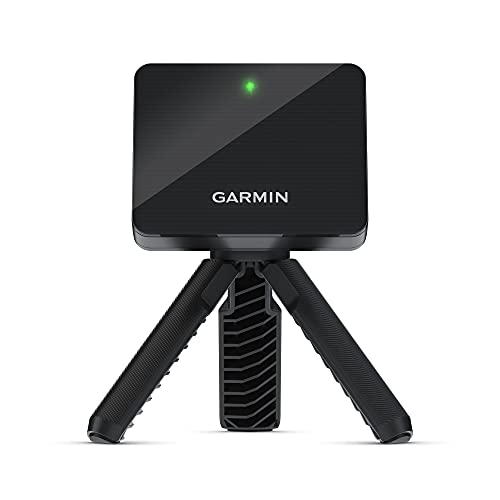
The Garmin Approach R10 is a portable launch monitor designed for use at home, indoors, or on the driving range. It integrates with the Garmin Golf app to track metrics such as club head speed, ball speed, swing tempo, ball spin, and launch angle. Training mode provides per-club stats and a shot-dispersion chart based on estimated ball flight, aiding targeted practice sessions. Battery life is up to 10 hours, and the device is designed for easy transport and setup in small spaces.
Rapsodo MLM2PRO Golf Launch Monitor

The MLM2PRO provides pro-level metrics including ball speed, club speed, launch angle, and spin rate. It supports both indoor and outdoor use, transforming spaces into golf simulators with real-time swing analysis and shot tracking. A built-in video playback feature helps visualize each shot, supporting active shot tracers to refine swing mechanics. The device pairs with smartphones or tablets to deliver a comprehensive training experience.
PRGR HS 130-A Portable Launch Monitor

The PRGR HS 130-A offers a highly affordable option with Doppler radar to measure club head speed (with or without a ball), ball speed, smash factor, and total and carry distance. It runs on AAA batteries—no Wi-Fi or Bluetooth required. The unit stores up to 500 swings and provides data comparable to higher-end models at a fraction of the price, making it a practical starter monitor for practice at home or on the range.
Voice Caddie SC300 Portable Launch Monitor

The Voice Caddie SC300 uses Doppler radar to deliver real-time shot data, including swing speed, ball speed, carry/distance, launch angle, and apex. It features an enhanced shot analysis suite and a clear display, with voice output to assist practice sessions without constantly staring at a screen. Its battery life reaches around 12 hours, supporting long practice sessions both indoors and outdoors.
Voice Caddie SC200Plus Portable Monitor

The SC200Plus emphasizes swing speed measurement and instant feedback, using Doppler radar to deliver data for home or outdoor use. It supports real-time analysis and is designed for quick setup and easy interpretation of results, helping golfers adjust tempo and swing mechanics during practice.
Buying Guide: Key Purchase Considerations
- Data metrics: Most budget monitors track ball speed, club speed, launch angle, and distance. If spin rate and axis are important for your goals, verify that the model provides a relevant spin metric and its accuracy.
- Measurement method: Doppler radar and GPS-based tracking each have strengths. Doppler-based units excel indoors and at the range, while GPS-based tracking is beneficial for outdoor sessions with larger shot dispersion data.
- Connectivity and apps: Some monitors pair with smartphones or tablets for deeper analysis, swing videos, and cloud storage. Consider whether you prefer app-based feedback or standalone data readouts.
- Power and portability: Battery life impacts practice duration. Look for devices offering several hours of operation and easy transport for practice rooms or driving ranges.
- Ease of use: Simple setup and intuitive interfaces help players focus on practice. Some models include voice output for real-time feedback, which can be advantageous during solo sessions.
- Durability and space requirements: If you practice indoors, ensure the device fits your space and that the radar sensors or cameras are protected in a small area.
- Price-to-value balance: While all listed options are budget-friendly, compare core metrics, data accuracy, and compatibility with your preferred apps to maximize return on investment.
- Upgrade path: If you anticipate growing your training complexity, consider models that offer more metrics or video analysis as you advance.
Choosing the right budget launch monitor involves balancing the number of measured metrics, ease of use, and how you plan to train. For beginners, a straightforward device with essential swing data may be most effective. For intermediate players, models offering video playback or more detailed metrics can provide deeper insights. Always verify compatibility with your preferred devices and apps to ensure smooth integration into your practice routine.