Discover the most accurate golf launch monitors to improve swing speed, ball flight, and overall accuracy. This guide highlights five top models that balance data depth with user-friendly design for different budgets and spaces. Ideal buyers include home golfers seeking real-time feedback, enthusiasts building indoor setups, and players wanting on-course data to track progress. The table below compares core specs to help you choose quickly before diving into each product’s details.
| Product | Best For | Key Data | Power |
|---|---|---|---|
| PRGR HS 130-A Portable Golf Launch Monitor | Budget-conscious learners | Club speed, ball speed, smash factor, distance | AAA batteries |
| Rapsodo Mobile Launch Monitor | Indoor/outdoor simulators | Ball speed, club speed, launch angle, GPS view | Battery/Smart device |
| Voice Caddie SC300i | All-around home/yard use | Swing speed, ball speed, carry, launch angle, spin (via app) | Rechargeable battery |
| Swinora Golf Launch Monitor | App-based analytics without fees | 13 metrics, 3D range, trajectory, video | App-based |
| Garmin Approach R10 | Versatile home use | Ball speed, club head speed, launch angle, shot dispersion | Rechargeable battery |
PRGR HS 130-A Portable Golf Launch Monitor

Best for budget-minded players who want straightforward data without apps. The PRGR uses advanced doppler radar to measure club head speed, ball speed, smash factor, total distance, and carry distance. It runs on AAA batteries and requires no Wi-Fi or Bluetooth. It can store up to 500 swings in memory, making it easy to compare progress over time. Caution: On-ball data can vary with ball type and technique; keep consistent equipment for reliable trends.
Rapsodo Mobile Launch Monitor

Best for users wanting indoor/outdoor simulators with GPS and shot-tracking visuals. The Rapsodo monitor delivers tour-level data for ball speed, club speed, and launch angle, plus GPS satellite view for precise shot tracking. It enables real-time swing analysis and a home simulator experience with interactive feedback. It’s well-suited for players who prefer visual data and a connected ecosystem. Limitation: Requires a compatible mobile device or tablet for full features and display.
Voice Caddie SC300i Portable Golf Launch Monitor

Best for versatile training both indoors and outdoors with long battery life. The SC300i measures swing speed, ball speed, carry/total distance, smash factor, launch angle, apex, and spin (spin data available in the My Swing Caddie app). It uses advanced Doppler radar to offer reliability with approximately ±3% ball speed and useful accuracy for target and practice modes. Choose this if you want extended sessions away from power outlets. Limitation: Full spin data may require optional app features.
Swinora Golf Launch Monitor & Simulator

Best for players who want a comprehensive 3D driving range and trajectory visualization without monthly fees. Swinora offers 13 metrics, 3D simulation, and real-time alerts, with built-in environmental sensors for indoor and outdoor accuracy. It provides a one-time app download and lifetime access. Indoor space must be sufficient to capture radar data (minimum recommended length). Limitation: Indoor data accuracy can improve with larger space and precise setup.
Garmin Approach R10
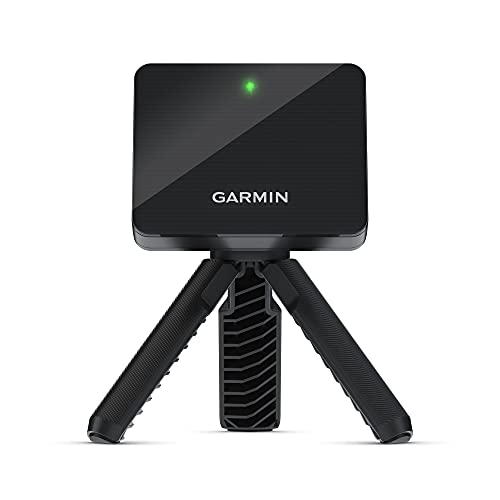
Best for users seeking a versatile, portable option with training mode and shot dispersion charts. The Garmin R10 pairs with the Garmin Golf app to track metrics such as club head speed, ball speed, spin, launch angle, and dispersion patterns. It’s designed for home use and driving range practice, with a battery life suitable for extended sessions. Caution: Some users prefer more granular data in the clubhouse/clinic setting; cross-check with your preferred data points before purchasing.
Buying Guide: Key Considerations For Choosing A Golf Launch Monitor
What data do you actually need? Focus on essential metrics: ball speed, club speed, launch angle, and carry distance. For serious improvement, look for spin data, apex, and dispersion analysis.
Where will you practice? Indoor spaces require compact devices with strong data visualization and stable app support. Outdoor use benefits from robust GPS and larger data capture ranges.
How tech-forward should it be? Some monitors rely on Doppler radar alone, while others pair with apps, smartphones, or tablets for deeper analytics. Decide if you value connected software or a standalone device.
How important is budget and ongoing costs? Several monitors have no monthly fees, while others offer expanded features via subscriptions or optional app modules. Consider total cost of ownership.
Compatibility and setup: Ensure the monitor works with your phone or tablet, and verify if a subscription or cloud service is required for full features. Check memory capacity for swing history and the availability of calibration tools.
FAQ
What is the most accurate launch monitor for home use?
Accuracy depends on measurement goals. Devices using Doppler radar and multi-mixel sensors tend to offer reliable data for most home setups, with higher-end models providing deeper analytics.
Do these devices require subscriptions?
Many models offer core data for free, with optional app features or cloud analytics requiring a subscription. Check each model’s feature list for specifics.
Can I use these monitors outdoors?
Yes, most models support outdoor use. Exterior lighting, weather conditions, and space can influence data accuracy; ensure adequate space for ball flight capture.
Will a cheaper monitor still help me improve?
Yes. A budget monitor can provide meaningful swing data and trends that help identify improvement areas, especially when paired with deliberate practice routines.
Which monitor supports the most metrics?
Higher-end or feature-rich models offer more metrics such as spin rate, apex, and detailed trajectory data, often with enhanced 3D visualization and simulators.