For American golfers seeking accurate, real-time feedback on every swing, portable launch monitors offer a compact, data-rich way to improve. This guide highlights five top options, spanning entry-level models to feature-rich trackers. Each section covers key metrics, compatibility, and practical use for home, outdoors, and training. A quick summary table below helps you compare at a glance.
| Product | Brand | Key Benefit | Typical Use |
|---|---|---|---|
| Mobile Launch Monitor | Rapsodo | GPS-based shot tracking with video playback | Indoor and outdoor practice |
| Approach R10 | Garmin | Comprehensive data with long battery life | Home, driving range, training |
| HS 130-A | PRGR | Affordable Doppler radar metrics | Budget-friendly practice |
| MLM2PRO | Rapsodo | Advanced metrics including spin | Home practice and training |
| Swinora Monitor | Swinora | 3D trajectory and environmental sensing | Indoor/outdoor practice with simulations |
Rapsodo Mobile Launch Monitor

The Rapsodo Mobile Launch Monitor combines GPS satellite tracking with shot distance, ball speed, club speed, and launch angle measurements. It supports real-time swing analysis and provides video playback to visualize flight paths. Ideal for both indoor simulators and outdoor practice, the device delivers tour-level data in a portable form factor. The built-in video playback and active shot tracers help users identify swing flaws and track changes over time. This model is tailored for iPhone and iPad users, integrating smoothly with compatible devices for on-the-go insights.
Garmin Approach R10 Portable Launch Monitor
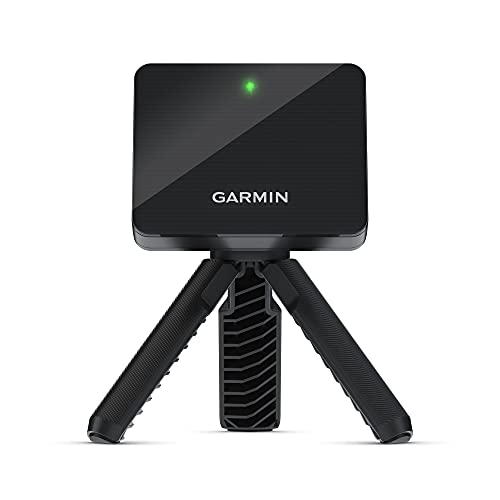
The Garmin Approach R10 is designed for versatile use at home, indoors, or on the driving range, with up to 10 hours of battery life. It offers precise metrics like club head speed, ball speed, launch angle, and dispersion charts when paired with the Garmin Golf app. Waterproof build and a training mode help players understand strengths and areas for improvement. The system supports tracking stats for each club, enabling targeted practice sessions and data-driven improvements without needing a dedicated driving space.
PRGR HS 130-A Portable Launch Monitor

The PRGR HS 130-A uses advanced doppler radar to deliver club head speed (with or without a ball), ball speed, smash factor, and total & carry distance. It stands out for being affordable while providing robust swing data without requiring Wi-Fi, Bluetooth, or mobile apps. With memory for hundreds of swings, it equips players with a practical baseline to track improvements over time. This unit is well-suited for budget-conscious buyers who want real metrics without integration complexity.
Rapsodo MLM2PRO Golf Launch Monitor

The MLM2PRO expands on the original with 13 core metrics, including spin rate and spin axis, delivering advanced data for serious practice. It pairs with smartphones or tablets to transform spaces into virtual golf simulators, offering realistic courses and precise swing analysis. Real-time data on ball speed, club speed, and launch angle helps refine technique, while the broader metric set supports targeted training plans. This model suits players who want deeper analytics and a more immersive practice environment.
Swinora Golf Launch Monitor & Simulator

Swinora blends environment sensors with expanded swing metrics and an immersive 3D simulation. Built-in temperature, humidity, and barometric pressure modules adjust shot data for indoor and outdoor realism. It tracks attack angle, launch angle, and provides clubface visuals, delivering professional-level insights. The 3D driving-range experience supports multiple viewing angles to study flight paths, spin, and dispersion—helping players tailor practice scenarios to specific conditions.
Buying Guide
When choosing a portable golf launch monitor, consider these purchase factors to balance accuracy, ease of use, and budget:
- Metrics and accuracy: Core metrics like ball speed, club speed, launch angle, spin rate, and spin axis are standard. Doppler radar-based units generally offer robust data, while GPS-based models excel in tracking shot locations.
- Connectivity and apps: Some monitors require a compatible smartphone or tablet; others function standalone. Determine whether you prefer integration with a specific app ecosystem and whether video playback or real-time voice coaching is important.
- Indoor vs outdoor use: If you practice indoors, ensure your device supports club head speed and swing analysis in limited space. For outdoor use, consider weather resistance and display readability in sunlight.
- Battery life: Longer sessions require devices with extended battery life, especially for driving-range-style practice or simulated rounds.
- Data depth vs price: More advanced models deliver richer metrics, including spin and axis, but at a higher cost. Budget-friendly options still provide essential swing data without requiring a connected app.
- Setup and portability: Weigh portability against setup complexity. Some units require calibration or alignment aids to maximize accuracy in various environments.
- Simulation and training features: If you value virtual courses or interactive practice, prioritize monitors with integrated simulations, analytics dashboards, and video playback for actionable feedback.
For most players seeking a balanced solution, models offering a mix of essential data—ball speed, club speed, and launch angle—along with convenient app integration tend to provide the best value. enthusiasts looking for deeper analytics and a simulated practice environment may opt for devices that add spin metrics and 3D trajectory visualization. Consider your typical practice space, preferred training style, and whether you want a portable, all-in-one training system or a more focused data-tracking tool.